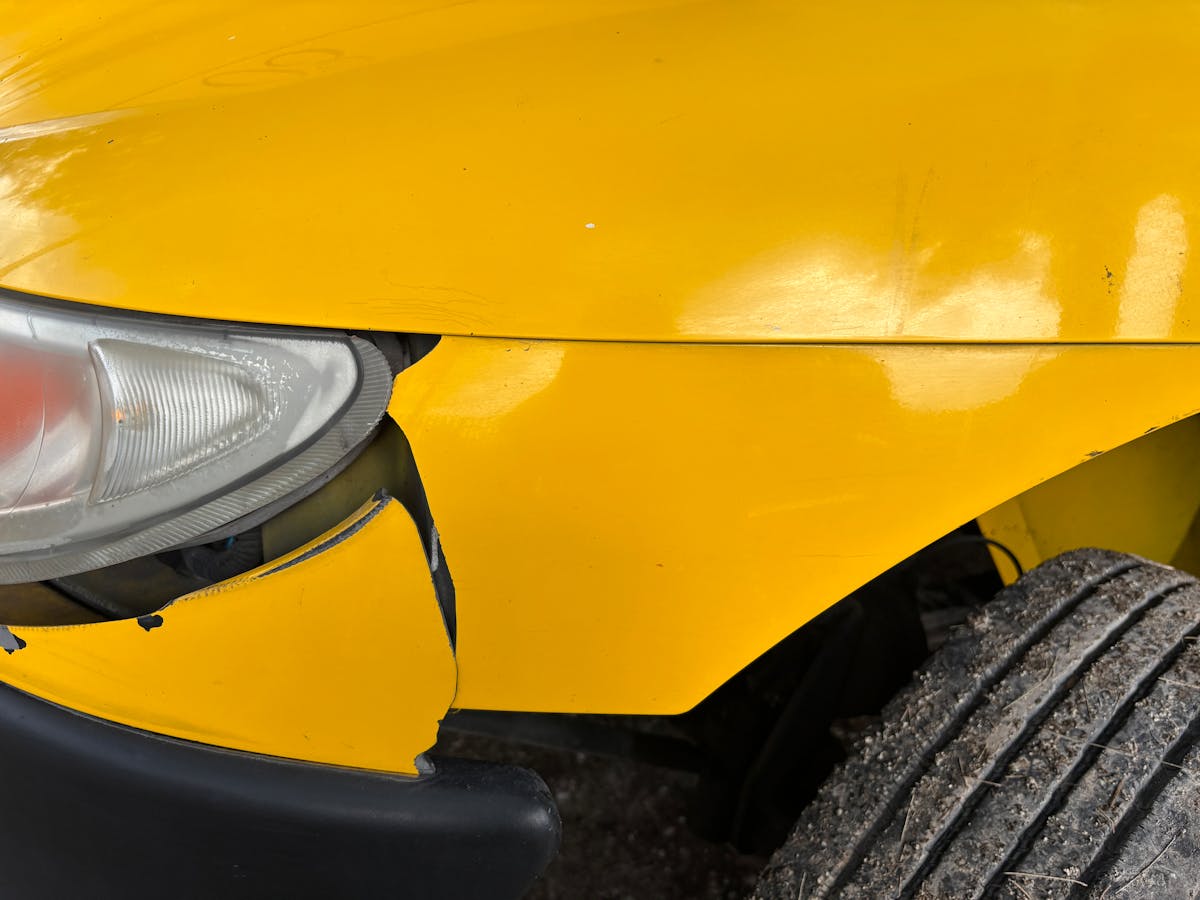
A damaged EV battery does not automatically mean your car is totaled. But because the battery pack is one of the most expensive components on the vehicle, repair costs can climb toward the car’s value far faster than they would on a gas car — and there’s a second financial issue many owners never see coming: your insurance settlement and your remaining loan balance are two different numbers.
Quick answer: can battery damage total your car?
Yes — but not by itself, automatically. Insurers weigh the vehicle’s pre-loss value against the full repair estimate (battery plus everything else), parts and labor availability, and state-specific rules. The National Association of Insurance Commissioners (NAIC) explains that when repair cost approaches or exceeds a vehicle’s worth, an insurer may declare it a total loss and pay that value instead of repairing it. For EVs, NAIC’s guidance specifically flags battery repair/replacement cost and limited specialist repair capacity as real factors in that calculation.
So the real question isn’t “was the battery damaged?” — it’s “does the full cost of restoring this car still make economic sense against what it was worth before the accident?”
How “total loss” is actually decided
There’s no single nationwide rule. The Texas Department of Insurance describes insurers comparing repair cost plus salvage value against the vehicle’s actual cash value (ACV); California’s insurance department notes insurers commonly use thresholds around 70–80% of ACV. The exact percentage depends on your state and insurer — never assume one fixed number applies everywhere.
A simple illustration:
| Pre-loss value | Estimated repairs | Likely outcome |
|---|---|---|
| $35,000 | $29,000 | Often still repaired |
| $35,000 | $38,000 | Likely a total loss |
Why battery damage changes the math
A collision can affect the battery modules, housing, cooling system, high-voltage wiring, and the battery management system — not just visible bodywork. That means a car can look externally repairable while the battery still needs specialist inspection before anyone knows the real cost. (We cover that inspection process in a companion piece on what happens after an accident.) Three realistic scenarios show how differently this can play out:
| Scenario | Vehicle value | Battery repair | Other repairs | Total repair cost | Likely outcome |
|---|---|---|---|---|---|
| A | $42,000 | $8,000 | $6,000 | $14,000 | Economically repairable |
| B | $31,000 | $18,000 | $10,000 | $28,000 | Borderline — insurer applies total-loss formula |
| C | $27,000 | $21,000 | $11,000 | $32,000 | Likely total loss |
There’s no rule that “a battery replacement always totals an EV.” The relationship between repair cost and vehicle value is what decides it — which is exactly why an initial estimate can grow once a specialist actually inspects the pack.
The second problem: your loan balance isn’t your car’s value
This catches financed owners off guard constantly. Standard insurance pays based on actual cash value (ACV) — what the car was worth right before the loss — not what you originally paid, and not what you still owe. The NAIC notes an insurer may pay less than a “Blue Book” figure, since that’s only a guide; the real number comes from comparable vehicles in your market.
A realistic example:
$48,000 EV, several years later
Illustrative figures, after a $1,000 deductible — your actual numbers depend on your loan terms, valuation, and policy.
Where GAP coverage fits
The Consumer Financial Protection Bureau (CFPB) describes GAP (Guaranteed Asset Protection) as an optional product that addresses the difference between what you owe on a loan/lease and what your insurer pays after a total loss or theft. Important: GAP doesn’t increase your car’s insurance value — your EV is still valued at whatever its ACV was. GAP instead covers some or all of the remaining loan deficiency after that settlement, depending on your specific contract’s terms.
What GAP usually does NOT cover
The CFPB is explicit that GAP has real eligibility restrictions. It’s generally not designed to cover: your deductible, rolled-over negative equity from a previous loan, late payment penalties, maintenance or mechanical issues, or battery degradation. Always read your actual GAP contract rather than assuming “I have GAP” means every dollar is protected.
How this connects to the rest of this series
This is the fourth piece in our EV battery insurance series — see EV Battery Warranty vs. Insurance for how warranty and insurance divide responsibility in the first place, and our companion piece on what happens immediately after an accident for how the inspection process that leads to these numbers actually works.
Frequently asked questions
Does every EV owner need GAP coverage? Not necessarily — it matters most when your loan balance is likely to stay higher than your car’s depreciating value for a while: small down payments, long loan terms, or financed fees/taxes all increase that risk.
Does my deductible still apply if my car is totaled? Yes — the deductible is subtracted from your ACV settlement regardless of whether the car is repaired or totaled.
Can a battery be repaired instead of fully replaced? Sometimes — module-level repairs are possible for some damage, but battery safety, manufacturer procedures, and technician qualifications all factor into whether that’s viable, not cost alone.
Sources
- National Association of Insurance Commissioners (NAIC) — consumer auto insurance and EV insurance guidance
- Consumer Financial Protection Bureau (CFPB) — GAP coverage guidance
- Texas Department of Insurance — total loss determination guidance
- California Department of Insurance — total loss and deductible guidance
- National Highway Traffic Safety Administration (NHTSA) — high-voltage battery safety guidance
This article is for educational purposes only and is not professional insurance, legal, or financial advice. All dollar figures are hypothetical illustrations, not real quotes. Confirm your specific coverage, state rules, and loan terms directly with your insurer and lender.